

1031 Exchange: Navigating Your Way to Wealth
We demystify the 1031 exchange—explaining how it works, highlighting its key benefits, and showing you how to use it to grow your real estate portfolio while keeping more of your capital working for you.
Whether you're a seasoned investor or new to the game, understanding the strategic advantages of a 1031 exchange can be a powerful tool for building long-term wealth.
6 Reasons Smart Investors Choose 1031 Exchanges
Build Wealth
Deferring capital gains taxes allows investors to reinvest more capital into higher-value properties, facilitating increased wealth accumulation.
Improve Cash Flow
Investors can exchange properties for those with higher rental income, enhancing their monthly cash flow.
Purchase Power
By deferring taxes, investors can utilize the full sales proceeds to acquire more valuable or additional real estate assets.
Diversify Real Estate Portfolio
A 1031 exchange enables diversification by allowing investors to trade properties in different markets or sectors, reducing risk.
Preservation of Equity
Deferring taxes helps preserve equity from property sales, allowing for reinvestment into new properties without losing capital.
Estate Planning
Properties passed to heirs may receive a step-up in basis, allowing them to avoid capital gains taxes, thus preserving wealth for future generations.
The Many Faces of 1031 Success
Our monthly spotlight of the wide range of people and entities who are using this powerful tax strategy to build wealth.

Agility in Acquisition: How Reverse 1031 Exchanges Secure the Perfect Deal
A reverse 1031 exchange lets you buy replacement property first while deferring capital gains tax—but the structure must exist before you close on the new asset.
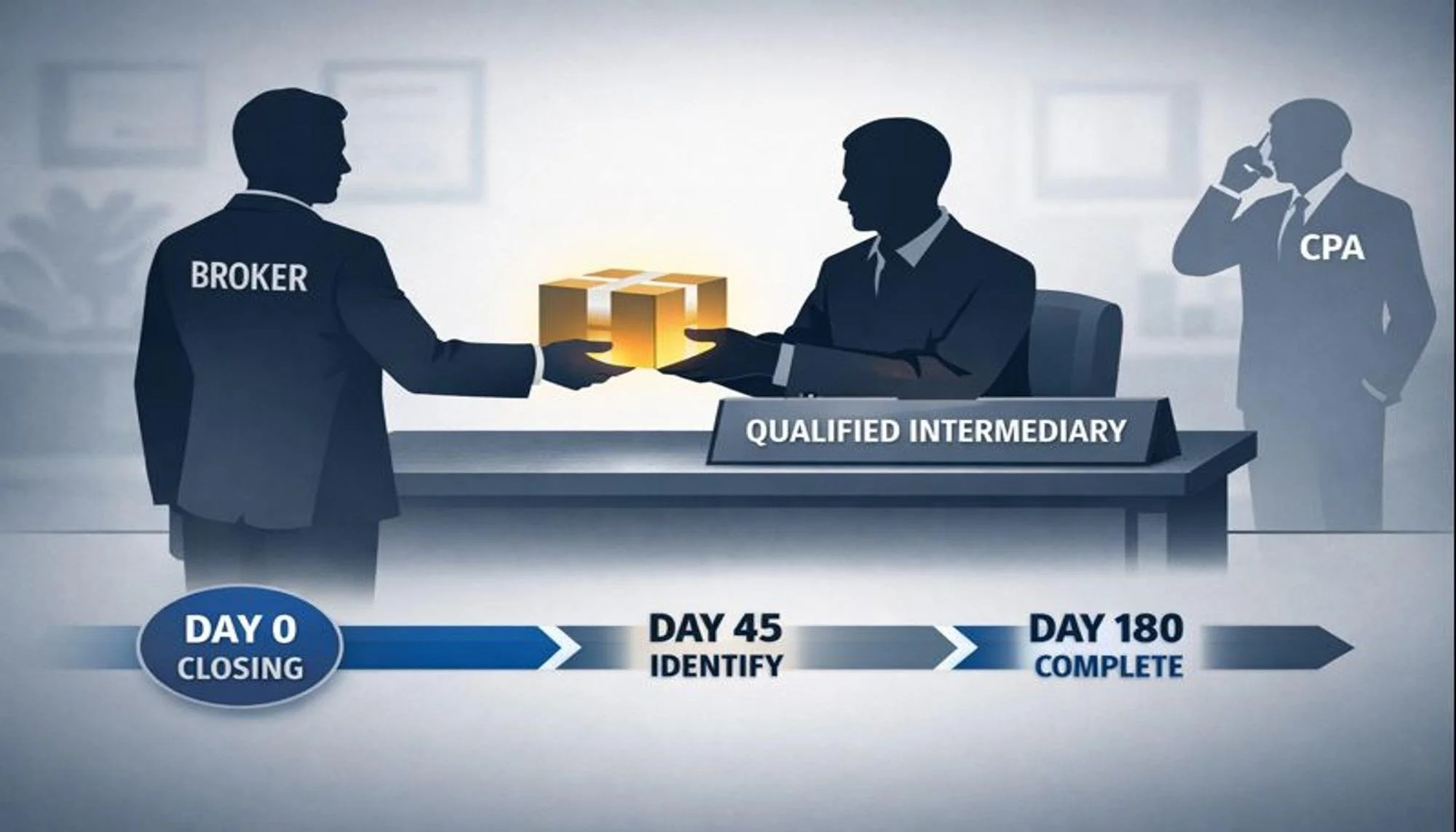
The Broker's Liability Guide to 1031 Referrals
Brokers face negligence claims when 1031 exchanges fail. Vet QIs through five security questions, engage at LOI stage, and document process-only boundaries.
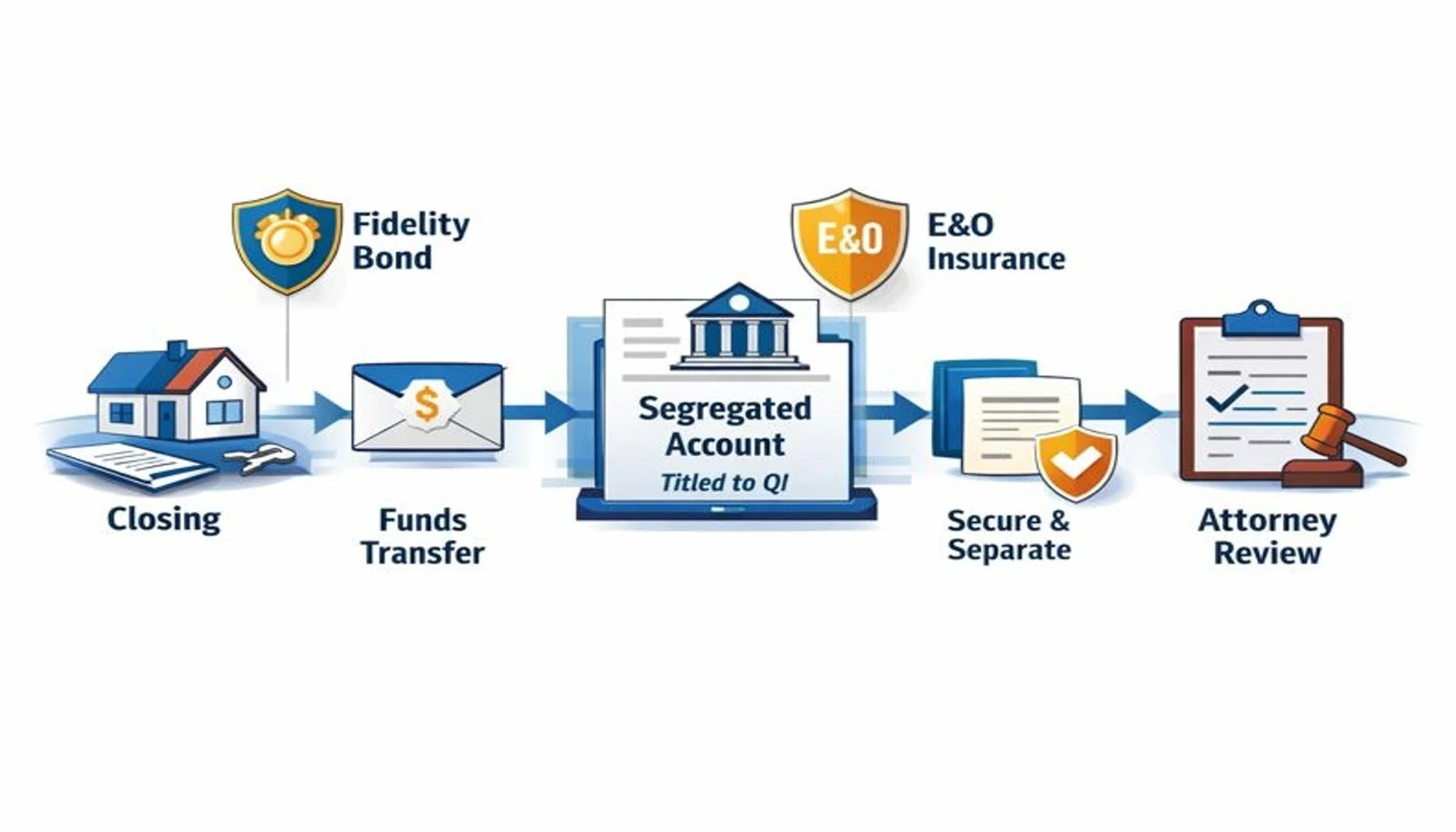
How to Choose a Qualified Intermediary: 5 Security Questions to Ask
Protect your 1031 exchange by asking five security questions about fidelity bonding, segregated accounts, and constructive receipt controls before signing with a QI.